The hardest part of trailer weighing was never the measurement, it was the wiring. Running cable from trailer axles to a cab display meant connectors at the kingpin, looms chafing through winters, and a system that broke every time the combination changed. The wireless trailer scale deletes the entire problem: sensors on the trailer talk through the air, the display is the phone in your pocket, and drop and hook stops being the enemy of weighing. Here is how wireless trailer scales work, why the radio architecture decides everything, and what to look for when you buy one.
What a wireless trailer scale is
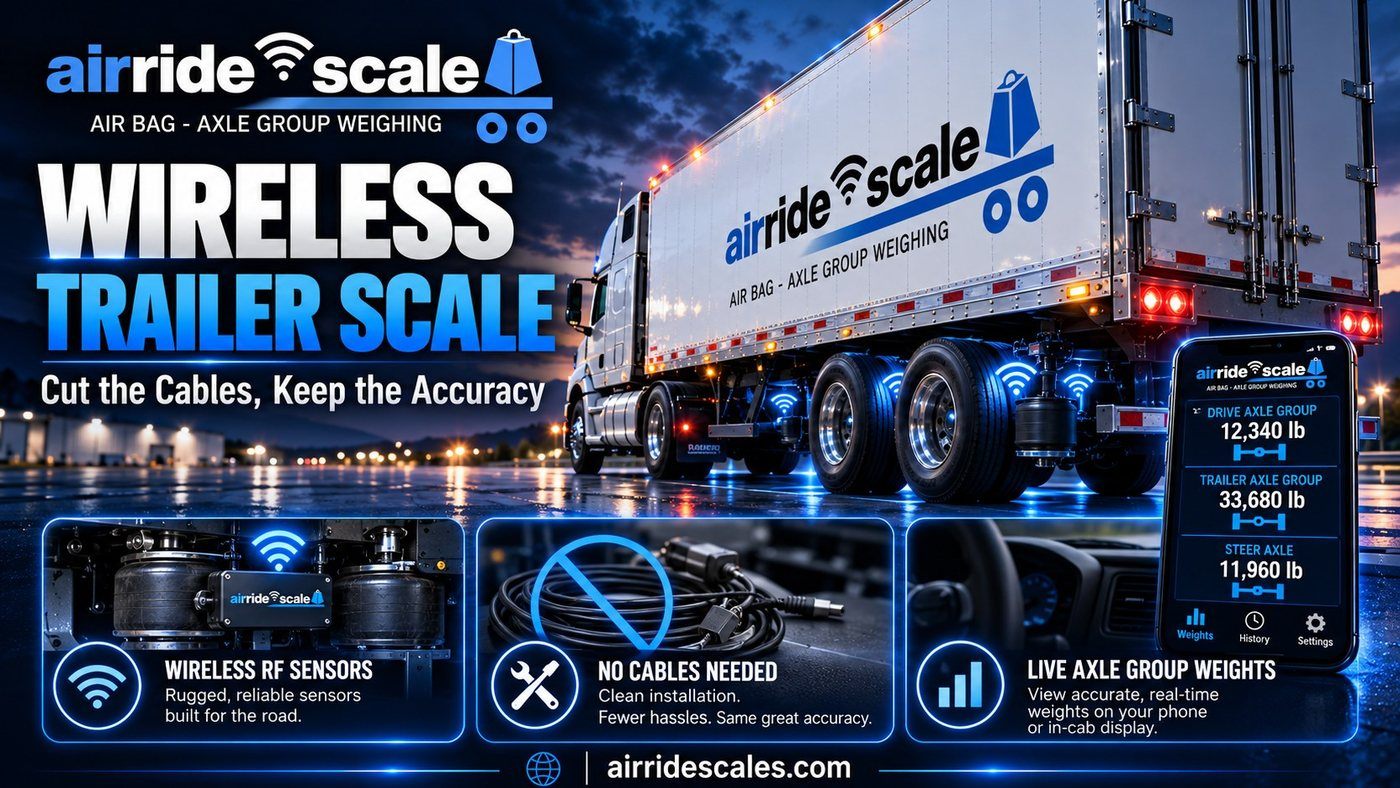
On an air suspension trailer, a wireless trailer scale places battery powered RF sensors at the air bags of each trailer axle group. The sensors read suspension pressure, the honest proxy for load on an air ride group, and transmit to a hub, the AirRide Air Link, which applies each group’s calibration and relays live weights by Bluetooth to a mobile app. No cable crosses the kingpin, no connector corrodes at the swan neck, and nothing needs plugging when trailers swap. The mechanism underneath is the same proven air suspension weighing covered in how air bag suspension scales work; wireless is the delivery system that makes it practical on trailers.
Why wireless architecture decides the product
Every wireless trailer scale lives or dies on one question: does the signal reliably cross fifty plus feet of steel, in a crowded yard, with the reefer howling? Two radio approaches compete. Bluetooth sensors pair directly to the phone, which sounds elegant and works on short rigs, but range fades along a long trailer, sensor counts are limited, and dropouts arrive exactly when the yard is busiest. RF frequency sensors, the AirRide architecture, transmit on a dedicated link built for the distance: roughly 50 metres of range, strong behaviour around steel, batteries that last years, and support for up to 16 sensors so multi axle trailers, B doubles and full combinations all report. The hub then uses Bluetooth only for the final hop to the phone, the best tool for each leg. The full comparison is in RF versus Bluetooth sensors.
The yard test: stand at the cab of a loaded combination and watch the rearmost trailer group update live on the phone. A wireless trailer scale that passes in a full yard will pass everywhere; one that stutters there will stutter forever.
Drop and hook, finally solved
Wired trailer weighing died at the kingpin: every hook meant a connector, every connector meant a failure point, and mixed fleets meant mismatched plugs. Wireless inverts the model. The sensors and calibration belong to the trailer; the app simply discovers whatever combination is present. Hook any tractor to any sensored trailer and the trailer group reads true within moments, with tractor groups alongside if the tractor is sensored too. For fleets, that means the weighing capability follows the asset that carries the freight, and utilisation of trailers no longer fights visibility of their weight. The operational case is expanded in our complete trailer scales guide.
Batteries, weather and the unglamorous engineering
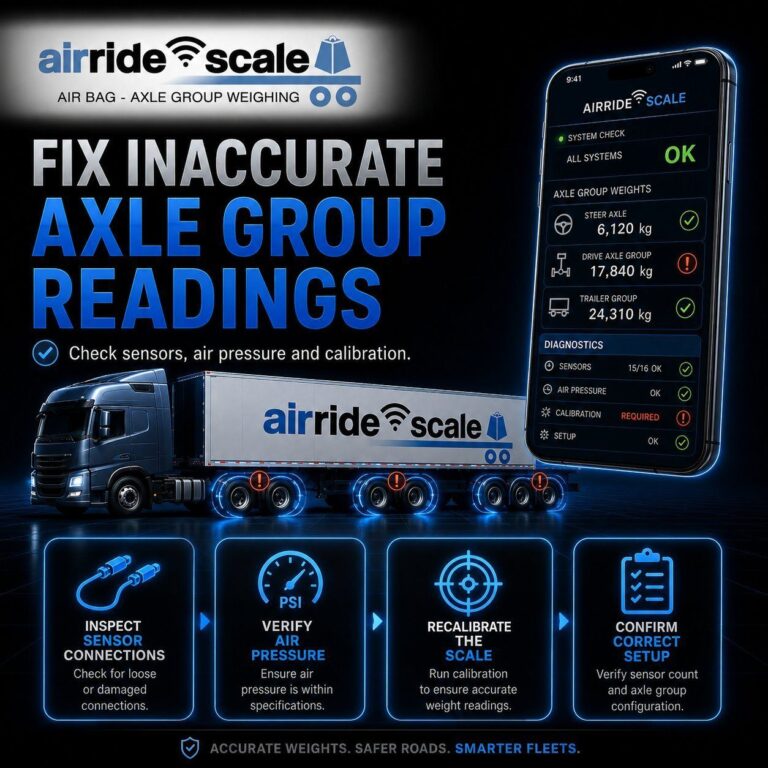
A wireless trailer scale earns trust in the details nobody demonstrates in a showroom. Sensor batteries must run for years, not seasons, because trailer axles are not where anyone wants a maintenance schedule; RF’s low power budget is what makes multi year life possible. Housings must be sealed against the salt spray, pressure washing and stone strike of life inches above the road; AirRide sensors are built for exactly that posting. And the app must name a problem instantly: open diagnostics and every sensor reports in, so a unit damaged in a yard strike is identified in seconds and swapped in minutes, per the troubleshooting guide.
Accuracy without the wires
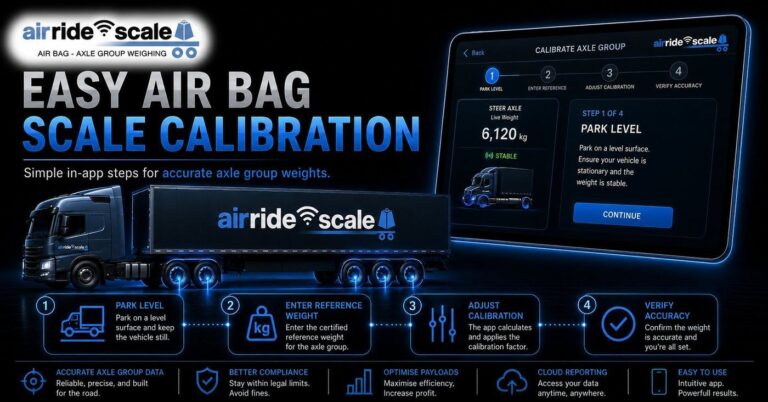
Going wireless sacrifices nothing on accuracy, because accuracy was never in the cable: it lives in calibration and air system health. Calibrate each trailer group against a certified weighbridge reference and keep the bags and levelling valves healthy, and the wireless readings match what the wired generation delivered, with none of the connector corrosion that used to corrupt it. The procedures are in the calibration guide, and the discipline pays off most on the freight that runs closest to the limits, refrigerated and bulk work, as the reefer trailer guide details.
Buying checklist for a wireless trailer scale
- RF sensor to hub architecture with stated range and 12 to 16 sensor capacity.
- Per axle group display with gross and legal status, in lbs and kg.
- Calibration owned by you, in the app, in minutes.
- Multi year sealed sensors with instant diagnostics.
- Phone as display, no cab hardware, no subscription for core weighing.
- Drop and hook behaviour: calibrations stored with the trailer, auto discovery on connection.
Measure any candidate against that list, AirRide Scale included; the onboard scale checklist covers the wider category and the product page holds our specifications.
Fit requirement: like all air suspension weighing, a wireless trailer scale needs air bag suspension on each trailer group you weigh, the standard spec for modern trailers across the USA, UK and Europe.
From one trailer to a wireless fleet
Rollout logic favours the trailer pool’s worst offenders first: the reefers and bulk tippers that buy the most scale tickets, then the drop trailers that spend their lives behind strangers’ tractors. Each trailer is a self contained day of fitting, so a fleet converts at whatever pace the workshop allows without taking anything off the road. Standardise the small things early, sensor positions photographed, groups named consistently in the app, calibration tickets filed, and every subsequent trailer gets faster. Fleets running the optional cloud portal gain a second effect as coverage grows: dispatch stops asking drivers what trailers weigh and starts reading it, which quietly removes a whole category of radio traffic and guesswork from the day. The endpoint is a trailer pool where weight is simply a known property of every asset, visible from the yard office, the cab and the loading dock alike.
The bottom line: wireless was the missing piece that made trailer weighing practical: no cables, no kingpin connectors, no drop and hook penalty, just live trailer weights on the phone of whoever is loading. AirRide Scale builds the wireless trailer scale around RF where it matters and Bluetooth where it is convenient. Get one on your trailers.