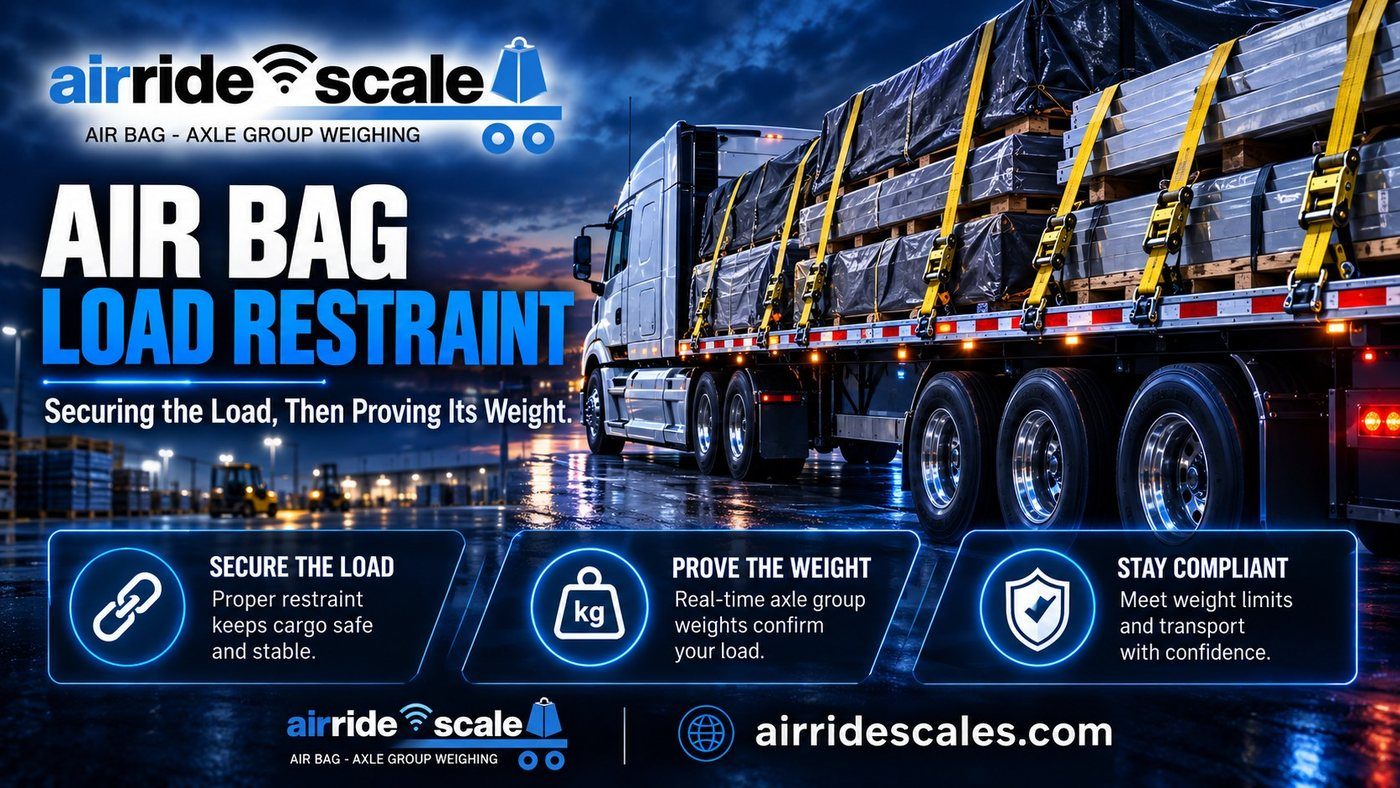
Air bag load restraint is one of transport’s quietly clever ideas: inflatable dunnage bags placed into the gaps of a loaded trailer and pumped up until the freight cannot move. Confusingly for searchers, it shares the words air bag with two other truck technologies, the air bags your suspension rides on and the air bag scales that read them, and this article untangles all three. We cover how load restraint airbags work and where they fit in a load securing plan, then the part most restraint guides skip: a perfectly braced load can still be an illegal one, because restraint controls movement while weight distribution controls compliance. The complete answer uses both.
What air bag load restraint is
Dunnage air bags are tough paper, woven polypropylene or vinyl bladders, inflated in place with shop air to fill the voids between pallets, between freight and trailer walls, or across the rear face of a load. Properly sized and inflated, they convert a loose load into a braced one: the bag transmits force across the gap so freight cannot shift forward under braking, slide rearward on grades, or walk sideways through corners. They are standard practice in rail, container and road freight, and they shine with loads that cannot be strapped hard, palletised food and drink, paper reels, appliances, drums. Rules of thumb that fitters live by: match the bag’s rating to the lane and load, inflate to the bag maker’s pressure rather than until it drums, protect bags from sharp corners, and never use a dunnage bag as the only restraint for freight that regulations require to be lashed.
The three air bags of trucking, kept straight
- Restraint air bags (dunnage): disposable or reusable bladders inside the trailer that stop freight moving. This section’s subject.
- Suspension air bags: the rubber air springs the truck and trailer ride on, part of the vehicle itself.
- Air bag scales: systems like AirRide Scale that read the pressure in those suspension bags and report live axle group weights.
The happy coincidence is that the second and third items mean every air ride vehicle hauling dunnage braced freight already carries the makings of a scale, which is where the compliance half of the story begins.
Why restraint alone does not make a load legal
Load securing and load compliance answer different questions. Restraint asks: will the freight stay where I put it? Compliance asks: was where I put it legal in the first place? A trailer can be braced immaculately with every void bagged, and still cross a scale with the drive tandem a thousand pounds over because the heavy pallets sat forward of centre. Worse, restraint locks the mistake in: once the bags are inflated and the doors shut, redistributing freight means deflating, restacking and re bracing, exactly the cost our weight distribution guide shows drivers paying at scale houses. The sequence matters: place the freight by weight first, verify the axle groups, then brace what is proven legal.
The costly order of operations: brace first and weigh later, and every weight problem becomes a restraint teardown. Weigh while loading and brace last, and the bags only ever lock in a legal load.
Live weights make restraint decisions better too
An onboard scale improves the restraint plan itself. Watching the axle groups while loading, as an onboard scale allows, tells the loader where the mass actually concentrated, which is exactly where restraint forces will act under braking. Heavy rows identified by the scale get the stronger bags and the lashing attention; light fill gets lighter bracing. On multi stop work, where each delivery removes freight and loosens the pack, the scale’s changing group weights flag how the remaining load has redistributed before the doors even open, a scenario our multi stop guide walks through. Restraint and weighing stop being separate chores and become one loading discipline.
A combined loading routine that works
Fleets that run both technologies settle into the same rhythm. Plan the stow by weight, heavy freight low and over or just ahead of the trailer tandems. Load against the live axle readings on the app, correcting placement pallet by pallet while the forklift is present. Confirm every group and the gross sit inside limits, in pounds or kilograms depending on which side of a border you load for. Then, and only then, place and inflate the dunnage bags, strap what must be strapped, and close up. The trailer leaves both braced and provably legal, with a time stamped weight record if a receiver or officer ever asks. Fitting the weighing half is a one day retrofit described in the retrofit guide.
Scope note: AirRide Scale is the weighing half of this partnership, reading suspension air bags on air ride vehicles to report axle group weights. Dunnage bags come from load securing suppliers; your regulator’s load restraint rules govern their use, and nothing here replaces those rules.
The payoff of doing both
Freight claims and overweight fines are the two self inflicted costs of loading, and they are prevented by different tools wielded in the right order. Dunnage air bags keep cargo intact; live axle weights keep the vehicle legal and the handling safe. Together they turn the trailer into something rare: a load that will neither move nor be moved on by an inspector.
Choosing and using dunnage bags well
A few practical standards keep restraint airbags effective. Size the bag to the void: a bag rated for a 10 inch gap stuffed into 18 inches of space works at a fraction of its strength. Inflate to the manufacturer’s pressure with a gauge, not by feel, since under inflation lets freight build momentum and over inflation stresses seams and can push walls on light trailers. Protect bags from corner cut: a sheet of cardboard between bag and pallet edge is cheap insurance. Mind temperature on reefer work, because air pressure falls as a warm loaded bag chills to minus twenty, which is one more reason refrigerated loads reward a final check. Reusable vinyl bags suit dedicated lanes; single use paper laminate suits general freight. And document the restraint plan alongside the weight record from the scale, because the combination of the two is what a claims assessor or roadside officer actually wants to see.
The bottom line: air bag load restraint secures what you loaded; an air bag scale proves you loaded it legally. Run the scale while loading, brace afterwards, and both the freight and the fine column arrive intact. Ask us about the weighing half.