Search for an air suspension weigher and you are really searching for a simple idea: the suspension under an air ride truck or trailer already responds to weight, so why not read it? Every air bag on the vehicle holds a pressure that rises and falls with the load above it. An air suspension weigher measures that pressure, applies a calibration, and reports the result as a weight you can act on. No weighbridge, no portable pads, no queue at the truck stop. This guide explains how the technology works, what separates a basic gauge from a true weigher, and how AirRide Scale applies the concept for trucks and trailers across the USA, Canada, the UK and Europe.
What exactly is an air suspension weigher?
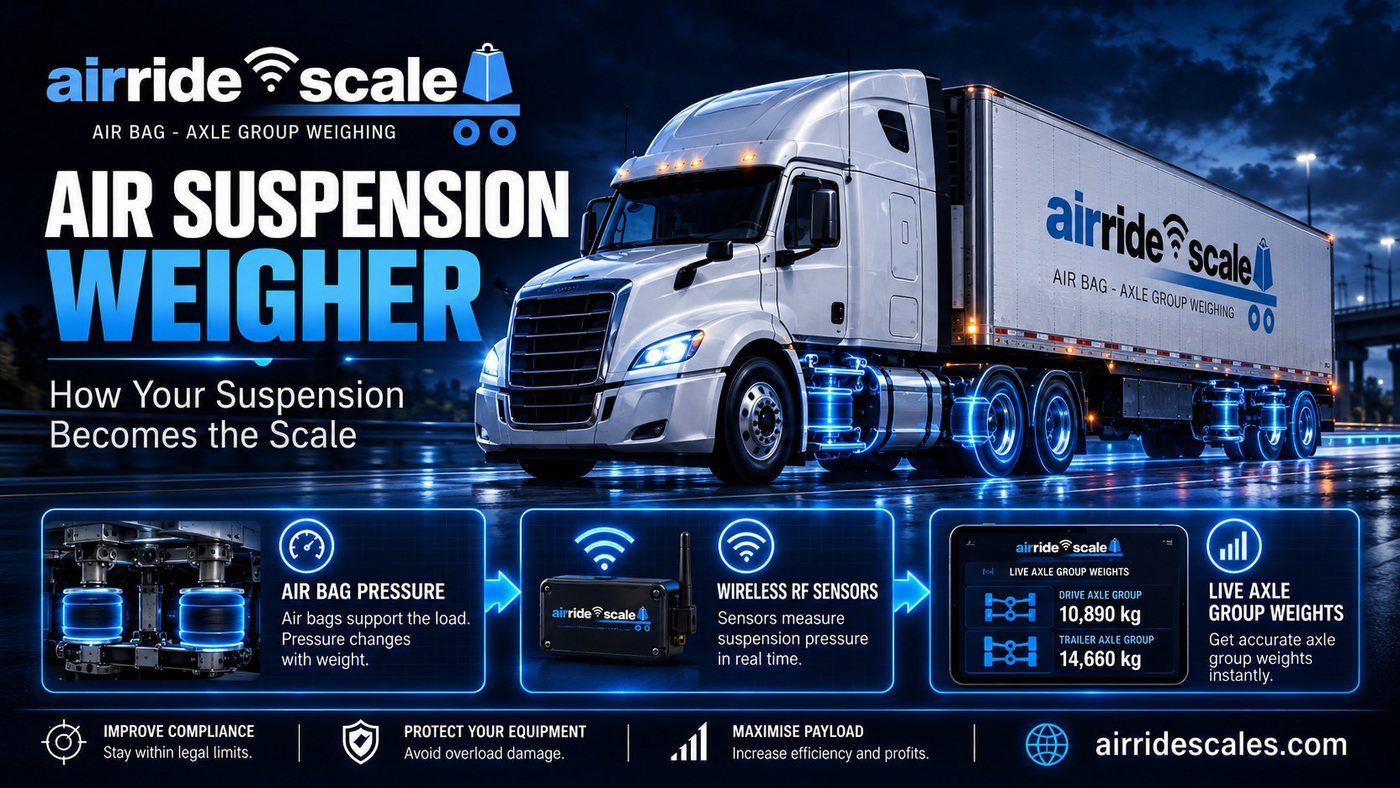
An air suspension weigher is an onboard weighing system for vehicles with air bag (air ride) suspension. Sensors connect to the air circuit at each axle group and read the pressure in the air springs. Because a height control valve keeps the suspension at a constant ride height, the pressure in the bags tracks the load almost linearly: more weight means more pressure to hold the same height. Convert that pressure through a calibration against a known weight and you have a working scale built from parts the vehicle already carries.
The weigher part is what turns raw readings into useful numbers. A pressure gauge on the dash shows PSI and leaves the interpretation to you. A proper air suspension weigher like AirRide Scale calculates actual weights per axle group, shows the gross, compares everything against legal limits, and presents it on a screen you already own: your phone.
How the AirRide Scale weigher works, end to end
- Wireless RF sensors mount at each air bag position on the steer, drive and trailer groups. They read pressure continuously and transmit by RF, which comfortably covers a full tractor and trailer combination.
- The AirRide Air Link hub collects every sensor, applies the stored calibrations, and converts the result to Bluetooth.
- The mobile app on iOS or Android displays live weights per axle group, total gross, and a clear legal limit status, in kilograms or pounds.
- Optional cloud reporting shares the same live picture with dispatch and fleet managers.
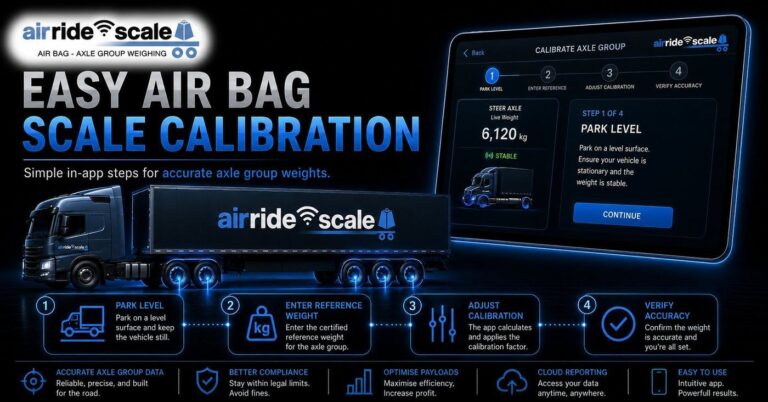
Calibration takes minutes: park level, enter a known weight for the group (a certified weighbridge ticket is ideal), and the app sets the pressure to weight relationship. From then on, every load is weighed as it is loaded. Our guides cover calibration step by step and how air bag suspension scales work in more depth.
What an air suspension weigher is not
Honesty matters here, because the limits define the fit. An air suspension weigher is not a certified trade scale: in most jurisdictions you cannot invoice customers from its readings the way you can from a certified weighbridge ticket. It is a compliance and operations tool, built to answer the question that matters every single day: is this load legal, and is it balanced? It is also not a universal fit. Because it weighs through the air springs, every axle group you want to weigh must ride on air bag suspension. Steel and mechanical spring groups have no pressure signal to read.
The rule of thumb: if your truck or trailer rides on air, it already contains nine tenths of a scale. The weigher is the missing tenth: sensors, a hub, a calibration and an app.
Accuracy: what to expect and how to keep it
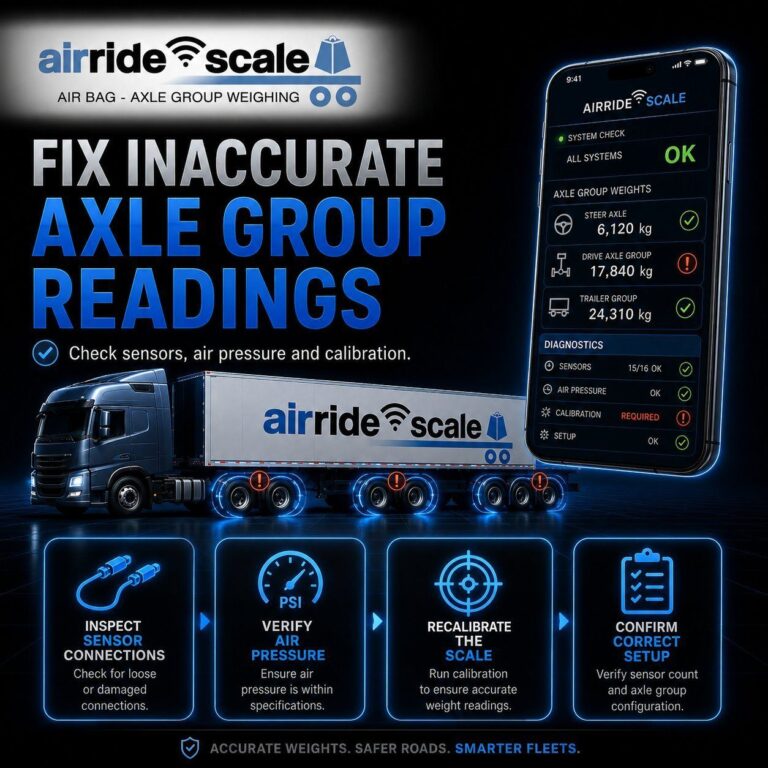
A well calibrated air suspension weigher delivers the accuracy operators need for check weighing: close enough to load confidently to the legal limit and to catch a heavy group before enforcement does. Accuracy lives and dies on three things. First, the calibration reference: the better the known weight you calibrate against, the better every subsequent reading. Second, the health of the air system: a leaking bag or sticking levelling valve will skew the group it serves, which is why our troubleshooting guide starts with the air circuit. Third, consistency: weigh on reasonably level ground with the suspension settled, the same way you calibrated.
Why operators choose a weigher over the weighbridge habit
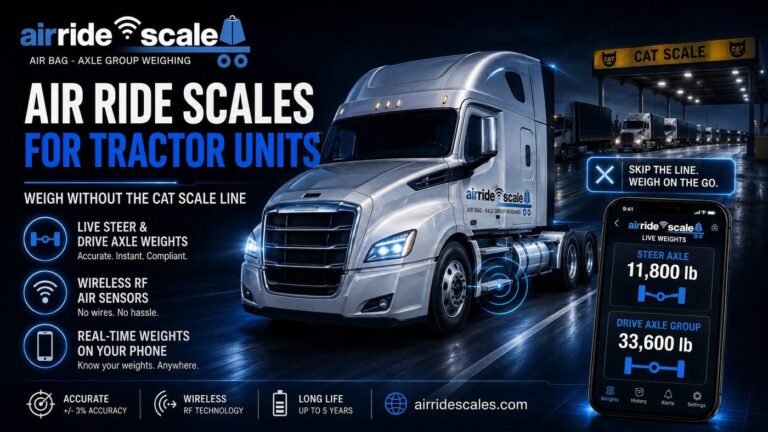
The economics are blunt. A public scale charges per visit, sits off your route, and only answers after the trailer is loaded. An air suspension weigher answers while loading, at the dock, for free, forever. For a vehicle that weighs weekly, the system typically pays for itself within the first year on avoided tickets alone, before counting detour miles, queue time, or the single overweight fine it prevents. We priced the comparison in detail in our CAT scale cost breakdown, and the pattern holds on both sides of the Atlantic: public scales in the UK and Europe charge the same way truck stops do in North America.
Who the air suspension weigher suits best
The strongest fits are operations that live close to their limits: refrigerated and bulk haulage, agriculture, aggregates, drop and hook fleets where the trailer changes but the compliance duty does not, and owner operators who carry the fine personally. Because sensors and calibrations belong to the vehicle, a sensored trailer weighs correctly behind any tractor, and a sensored tractor reads its own groups under any trailer. With support for up to 16 sensors on one Air Link, full combinations, B doubles and multi axle trailers are covered.
Air bag suspension only. AirRide Scale reads load through the air springs, so it fits trucks and trailers with air ride suspension on each axle group you want to weigh. Most modern highway equipment in the USA, UK and Europe qualifies; check your spec sheet before ordering.
Getting one fitted
Installation is a same day aftermarket retrofit: mount the sensors at each air bag, connect and power the Air Link, pair the app, calibrate per group. There is no in cab display to buy and no cable run to the cab. The full process is on our onboard truck scales page, with the trailer side covered under trailer scales, and the retrofit guide walks through it step by step.
The bottom line: an air suspension weigher is the most direct route from the equipment you already own to the weight data you need every day. AirRide Scale packages it as a cost effective, wireless system you can fit this week and trust for years. Ask us about fitting one to your fleet.