Drivers call them air bag scales, airbag scales, air scales or bag gauges, and they all point at the same destination: using the suspension airbags a truck already rides on as the sensing element of a scale. Truck airbag scales have been around in crude form for decades as dash mounted pressure gauges. The modern version, the kind AirRide Scale builds, is a different machine entirely: calibrated, per axle group, wireless, and live on your phone. Here is the full picture, from the physics to the purchase decision.
The physics: why airbags make honest scales
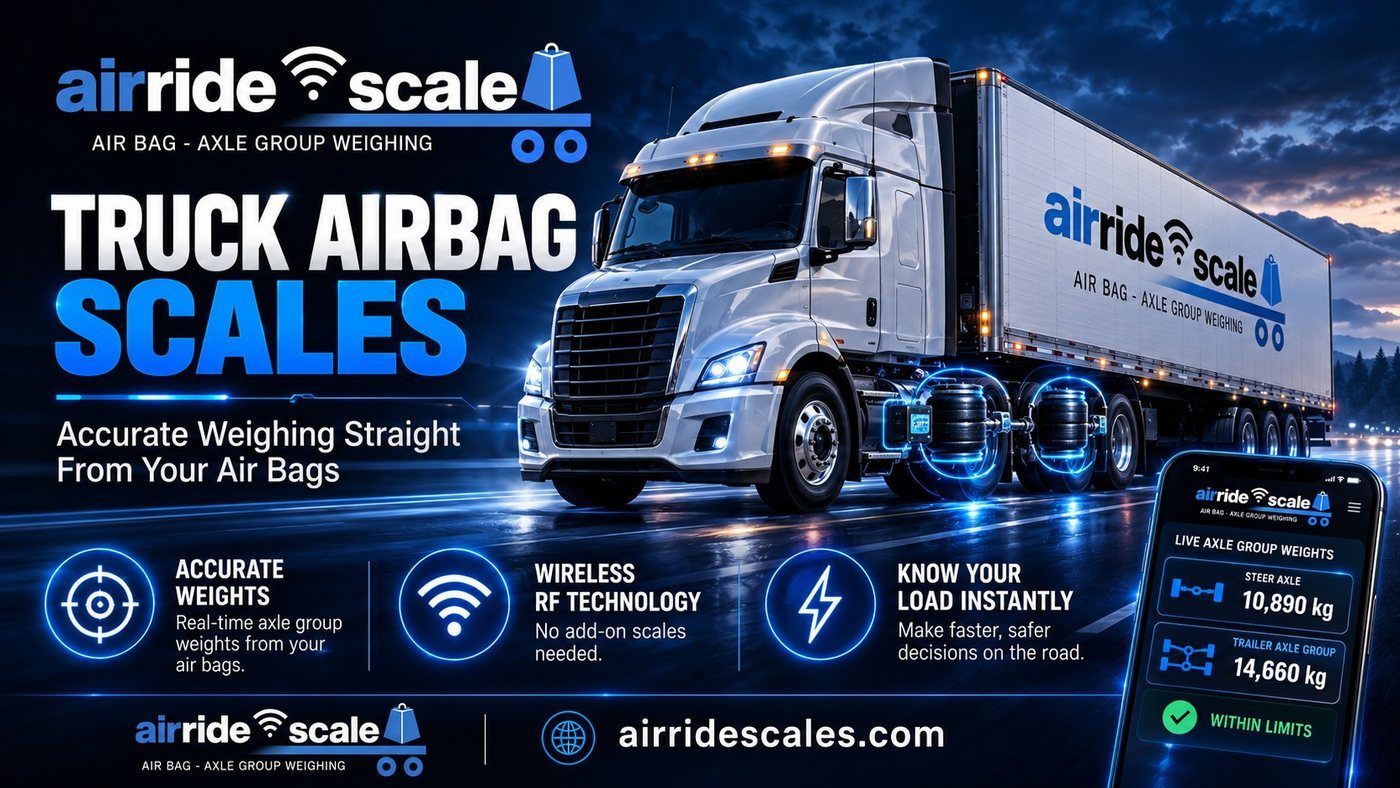
An air ride truck carries its load on rubber air springs inflated from the vehicle’s air system. A height control valve constantly adjusts the pressure so the chassis sits at the same ride height whether the trailer is empty or grossed out. That self levelling behaviour is the key: at a settled ride height, the pressure inside the airbags is a direct function of the weight pressing down on them. Double the payload on an axle group and the pressure climbs in proportion. Truck airbag scales simply measure that pressure precisely and translate it, through calibration, into kilograms or pounds.
Gauge versus scale: the generational leap
Old school operators have squinted at air gauges for years, learning that 68 PSI on the drives meant roughly loaded and 85 meant trouble. It worked, barely, for one circuit and one experienced set of eyes. Modern truck airbag scales replace folklore with measurement:
- Calibrated weights, not raw PSI. Each axle group is calibrated against a known weight, so the app reads 33,400 lbs, not a number you must interpret.
- Every group at once. Steer, drives and trailer groups display together, which is the only way to see balance, not just load.
- Legal limit status. The app compares live weights with the limits and shows a plain compliant or over reading.
- History on your phone. No more memorising what the gauge said at the last dock.
The deeper technology story, from RF sensors to cloud reporting, is covered in the technology behind modern air ride scales.
What accuracy can truck airbag scales achieve?
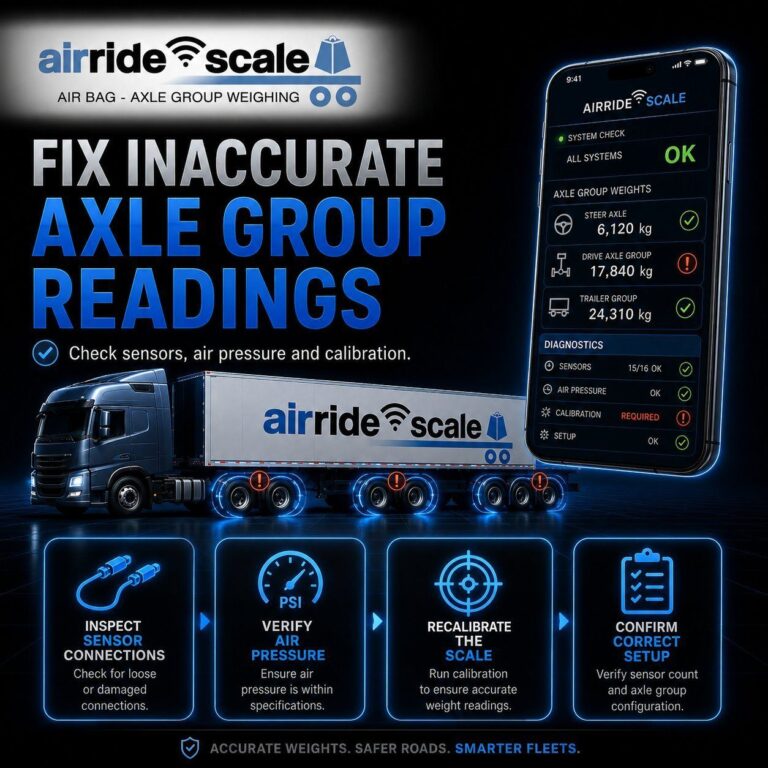
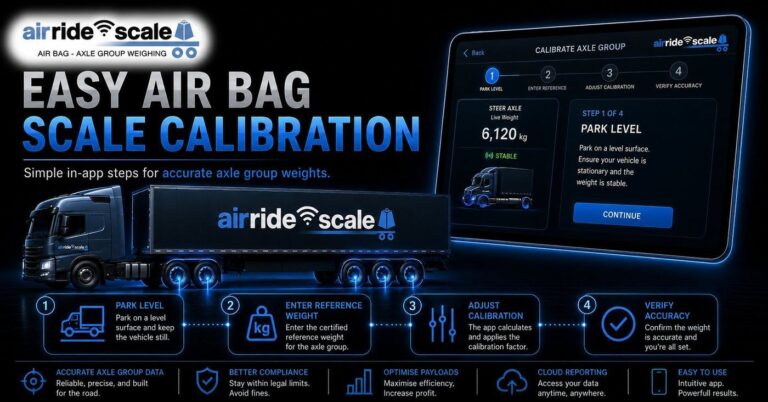
Accuracy follows calibration quality. Calibrate each group against a certified weighbridge ticket and a healthy air system will reward you with readings dependable enough to load to the legal limit with confidence. The practical enemies of accuracy are mundane: a slow leak in one bag, a levelling valve that sticks, parking on a crown or slope, or calibration that was never updated after suspension work. All four are visible and fixable, and our inaccurate readings guide walks through the diagnosis in order. A sensible habit is to sanity check the system against a certified scale occasionally and recalibrate if drift appears.
Worth knowing: dual height control valves are common on drive axles. Groups with two levelling valves take a sensor on each side, and AirRide Scale supports up to 16 sensors across the combination, so even complex multi axle rigs read correctly.
What truck airbag scales cost, and what they return
This is where airbag scales embarrass the alternatives. Load cell systems that weigh between the chassis and body deliver certified grade precision but at a price and installation effort most fleets reserve for payload critical work. Truck airbag scales sit at the opposite end: the sensing medium is already on the truck, the sensors are wireless, your phone is the display, and fitting is a same day job. Against the running cost of the public scale habit, 13 to 15 dollars a visit in the USA, similar money in the UK and Europe, plus detour miles and queue time, the payback question usually answers itself within the first season. The complete arithmetic is in our public scale cost comparison and the owner operator ROI breakdown.
Fitting airbag scales to your truck
The AirRide Scale retrofit follows four steps: mount a wireless RF sensor at each airbag position on the groups you want to weigh, install and power the AirRide Air Link hub, pair your phone by Bluetooth, then calibrate each group in the app against a known weight. No dash cutting, no cable runs, no downtime worth the name. The aftermarket sensor installation guide covers the details, and the product page lists the full system specification.
One requirement, clearly stated
Airbag suspension only. Truck airbag scales read load through the air springs, so every axle group you want to weigh must ride on air bag (air ride) suspension. Spring ride axles have no pressure to measure and are not supported. If your steer, drive and trailer groups ride on air, you are ready.
Who gets the most from them
Any truck that weighs regularly profits, but three groups profit fastest. Reefer and bulk operators, who live near the limits and currently buy the most scale tickets, as our reefer trailer guide shows. Fleets running drop and hook, because sensors and calibrations stay with each unit and every hook still reads true. And owner operators in the USA, Canada, the UK and across Europe, for whom a single avoided overweight citation can cover the hardware outright.
Airbag scales in daily practice
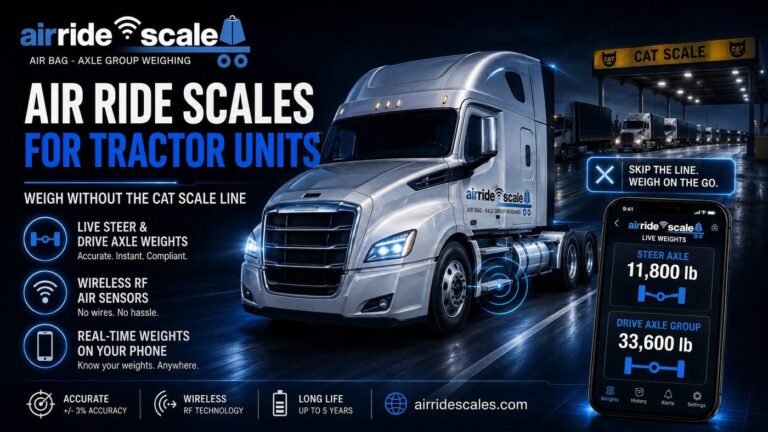
The workflow that develops around truck airbag scales is the real sales pitch. Morning hook up: glance at the app, confirm the trailer’s tare looks right and every sensor reports. At the shipper: watch the drive group and trailer group climb as the forklift works, and stop the load or shift pallets the moment a group approaches its limit instead of discovering it later. Fuel stop: see the few hundred pounds the full tanks added to the steer. At the weigh station: roll across the in ground scale already knowing what it will say, which is the quiet luxury drivers mention most. Over a season, the habit compounds into fuller legal loads, calmer inspections, and tyres and brakes that wear evenly because the weight finally sits where it should. The scale stops being equipment and becomes part of how the truck is driven.
The bottom line: your truck’s airbags already know what the load weighs. Truck airbag scales from AirRide simply let them say it out loud, on every load, before the scale house asks. Get a quote for your trucks, or start with the FAQ if you have questions.